
My Professional Journey
My journey began in 1991. After spending long hours in the library researching Italian design and completing my degree in Manchester, I travelled to Milan, where I spent weeks walking the city and cold-calling design studios, brands, and designers whose work I admired. During that time, I met James Irvine, Aldo Cibic, Ettore Sottsass, Marco Zanuso, and Alberto Alessi.
After carrying a 25kg portfolio across the city to meet Achille Castiglioni, he introduced me to Italo Lupi, then editor of Domus, who featured my student work in his final edition. Following the publication, the founders of Technogym called while I was working in Marco Zanuso’s studio. I still remember the look on his face: «È una palestra, vogliono parlarti.»
That call led to a long collaboration and the design of the Cardio XT range in early 1992, alongside being offered the Creative Direction role at Nava Design. It marked the beginning of my professional career in product design.
It was just a thought, an idea to travel to Milan.
It seemed like a good idea at the time. It was.
-
An independent profile of Theo Williams’ formative professional years
It’s a journey that began in 1991 when, as a fresh-faced graduate, Williams spent weeks walking the streets of Milan, portfolio in hand, cold-calling design studios and businesses.
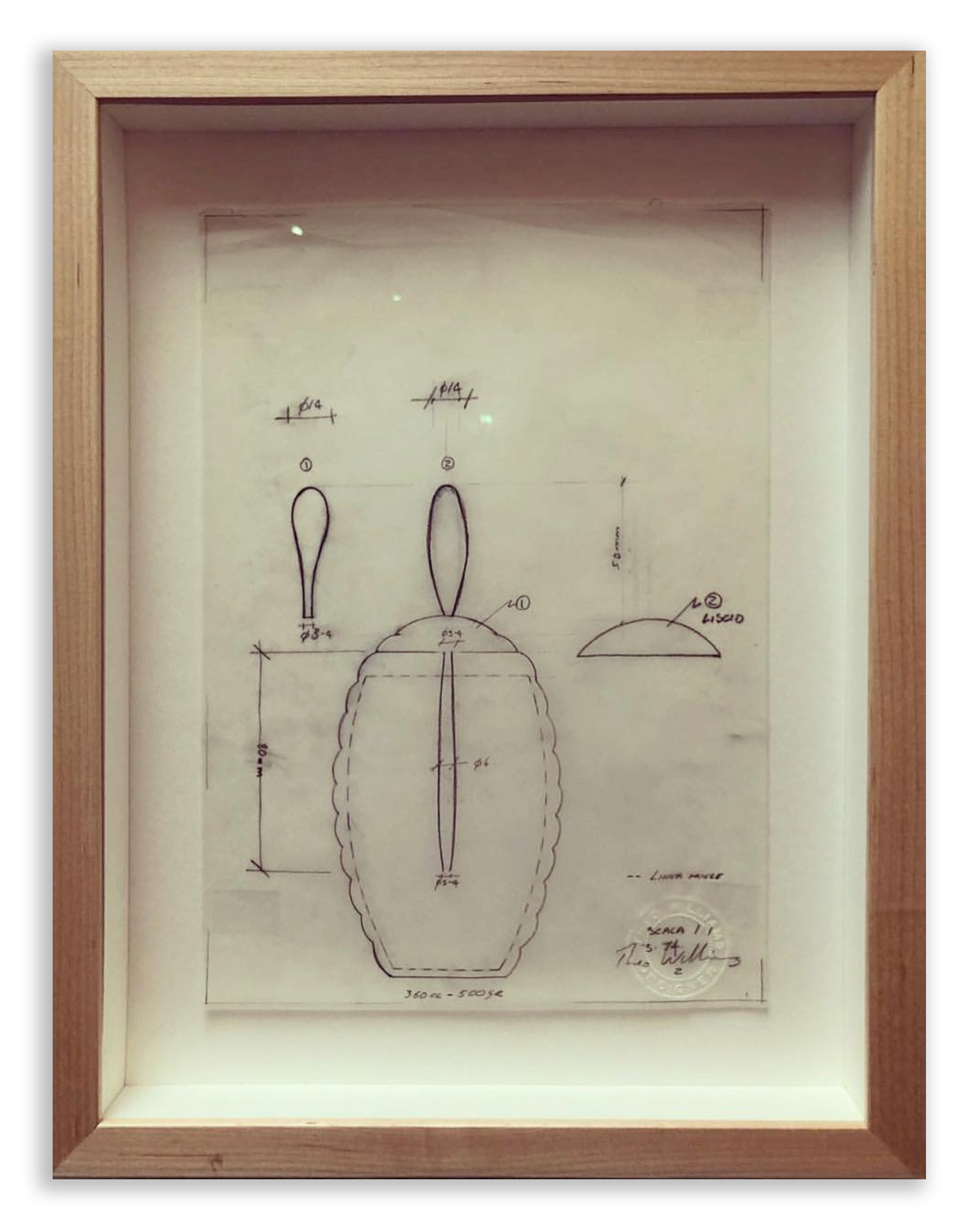
Around that time, while attending a lecture by Alberto Alessi, Williams intervened uninvited to present his student portfolio. His tenacity, some might say audacity, paid off: Williams received a brief from Alessi that led to the design of the Alessi Honey Pot and Sugar Jar. He remains the youngest designer to have designed under the Alessi banner. At the start of 1992, Italo Lupi, editor of the renowned Domus, featured Williams’ work in his final edition. Williams was just 23 years old.
Writing in Domus, Enrico Morteo observed that, on occasion,
“British designers assume a straightforward approach, enabling their objects to capture all the complexity of a given situation, without overloading them with Baroque semantic implications.”
He went on to place Williams alongside emerging figures such as Jasper Morrison, Ron Arad, Nigel Coates, and Marc Newson, noting a shared sensibility. After seeing the article, which included a children’s camera and radio Williams had designed while at college, the founders of Technogym approached him simply because they liked the work.
Williams’ early years in Milan, working for Technogym on the XT cardio fitness range and later as an in-house product designer for Nava Design, exposed him to the realities of in-house development and, crucially, to industrial printing processes. His experience at Nava Press, where graphics and printing were combined intensively to produce high-quality materials for Italian fashion houses, proved career-defining.
Reflecting on that period, Williams explains:
“I was fascinated by the people at Nava, especially in printing and packaging production — their deep knowledge of traditional printing methods being adapted to new digital machines. When I arrived in ’91, they were still clearing out old wooden blocks from the past; they were still using them. But it was the Italians’ attention to detail and perfection that stayed with me. They were perfectionists in design, printing, and production. They became my second family.”
That commitment to clarity, strength, and straightforward design has remained central to Williams’ philosophy ever since.
As Dario Moretti wrote in Ottagono in 2000,
“In a few years, Williams has created a series of small objects that insert themselves into the daily scene with a tranquil but precise identity… Williams is a designer who makes materials talk.”
Williams went on to develop packaging for Prada, Ferragamo, and Armani. His understanding of how industrial methods underpin great design has remained constant throughout his career.
“I could see that design was about so much more than the product,” he explains. “I wanted to reach further into the mechanisms of a working company, the construction of an image, the direction of the company as a whole, and how products are made, produced, packaged, and communicated.”
That ethos was evident in his work for the French design company Lexon, which invited Williams to Paris for two weeks each month as Art Director, tasked with bringing soul to their products.
Writing in House & Garden, critics observed that
“Williams’ design spirit infused everything from the packaging to the catalogue to the products themselves.”
His OYO computer cord for Lexon was later awarded the Design Plus Award in 2002. During his early years, he won five DesignPlus awards.
A collaboration with Japanese brand Mono Comme Ça followed, encompassing shop design, packaging, displays, and product development. Projects for Salvatore Ferragamo and Giovanni Testino, and a two-year period in Amsterdam as Design Director for Mexx, further cemented Williams’ credentials as both designer and creative director across Europe’s design capitals.
This extended European journey brought Williams back to the UK in 2006 to take up the role of Creative Director at Habitat.
The SS09 collection received widespread acclaim for its focus on the purity of product design, deliberately stepping away from the high-street convention of seasonal narratives in favour of well-developed objects and contrasting production techniques.His 2009–2010 Habitat catalogue marked a turning point for both Williams and the company. Drawing together years of experience, it presented the home and the city as the environments we inhabit, offering an honest observation of contemporary living. The catalogue was met with critical acclaim and resonated strongly with Habitat’s heritage.
An influential two-year period as Head of Design at John Lewis followed. With responsibility for the design strategy of seasonal home collections, Williams made his mark through the creation of the HOUSE brand.
As John Lewis later noted,
“His work on the HOUSE range, in particular, has created an important legacy for our home product assortment.”
Williams is recognised as one of the few British designers to combine industrial design sensibility with a deep understanding of industry, cost, and manufacturing, applying that knowledge not only to products, but to the systems and structures that support them.
PC.
Experience & Key Roles
My career spans over three decades across product, furniture, retail, and brand within global organisations. My work has been shaped by operating inside large organisations, where design is not an isolated discipline, but part of a wider system involving people, process, and purpose.
Creative Director - Shinsegae Group
South Korea / London
Led brand strategy and creative direction for CASAMIA, Shinsegae’s own-brand home offer.
Reported directly to the board and the CEO
Delivered brand strategy, product direction,
and retail visionPositioned CASAMIA as the
“House of Design” in South Korea
Design Director - Kingfisher plc
London, UK
Led global design direction for Kingfisher’s ONE Kingfisher strategy, unifying design across 11 countries.
Built and led an internal design studio
from 8 to 67 designersDirected own-brand product strategy across multiple categories
Managed £4m annual design budget
Delivered award-winning products
(Red Dot Awards)Developed CMF, Customer & Home insights and sustainability programmes
Head of Design - John Lewis Partnership
London, UK
Led creative direction for own-brand home collections across all categories, aligning product, brand, retail, and communication within one of the UK’s most trusted retailers.
Defined and delivered the HOUSE brand across product, graphics, marketing, and retail
Led multidisciplinary teams across product, furniture, textiles, graphics, and retail
Worked directly with buying, merchandising, and the board
Launched HOUSE within 12 months,
achieving £50m in first-year sales
Creative Director - Habitat
London, UK
Responsible for redefining Habitat’s creative direction, building on its legacy while repositioning the brand for a contemporary global audience.
Led all product collections and brand strategy
Managed international teams across product, brand, retail, and communication
Delivered brand vision across Europe and Asia
Established Habitat Contract and wholesale initiatives
Earlier career
Earlier in my career, I designed for and held senior design and creative roles with…
Alessi - Designer
Technogym - Designer
McLaren F1 - Designer/Strategy - Product Licensing
IKEA - Designer
Mexx, Amsterdam - Design Director - Product Licensing
Lexon, France - Designer & Creative Director
Nava Design - Italy - Creative Director
Danese Milano - Designer
Tchibo, Germany - Designer
Ritzenhoff, Germany - Designer
WMF, Germany - Designer
What I’m known for
Conceptual thinking
Translating complexity into clear, coherent design systems
Leading multidisciplinary teams within large organisations
Aligning design, brand, and commercial strategy
Building long-term value across products, spaces, and communication
Industry involvement
Over the years, alongside commercial work, I have contributed to the industry through lectures, panels, media, and education, including speaking at design festivals, universities, and industry events, and supporting emerging talent through mentorship and collaboration.